
As Ireland takes over the Presidency of the EU for the 8th time, Damien O’Reilly ICOS EU Affairs manager looks at the priorities from a farming and co-operative perspective. The piece was published in the July edition of the Irish Farmers Monthly.
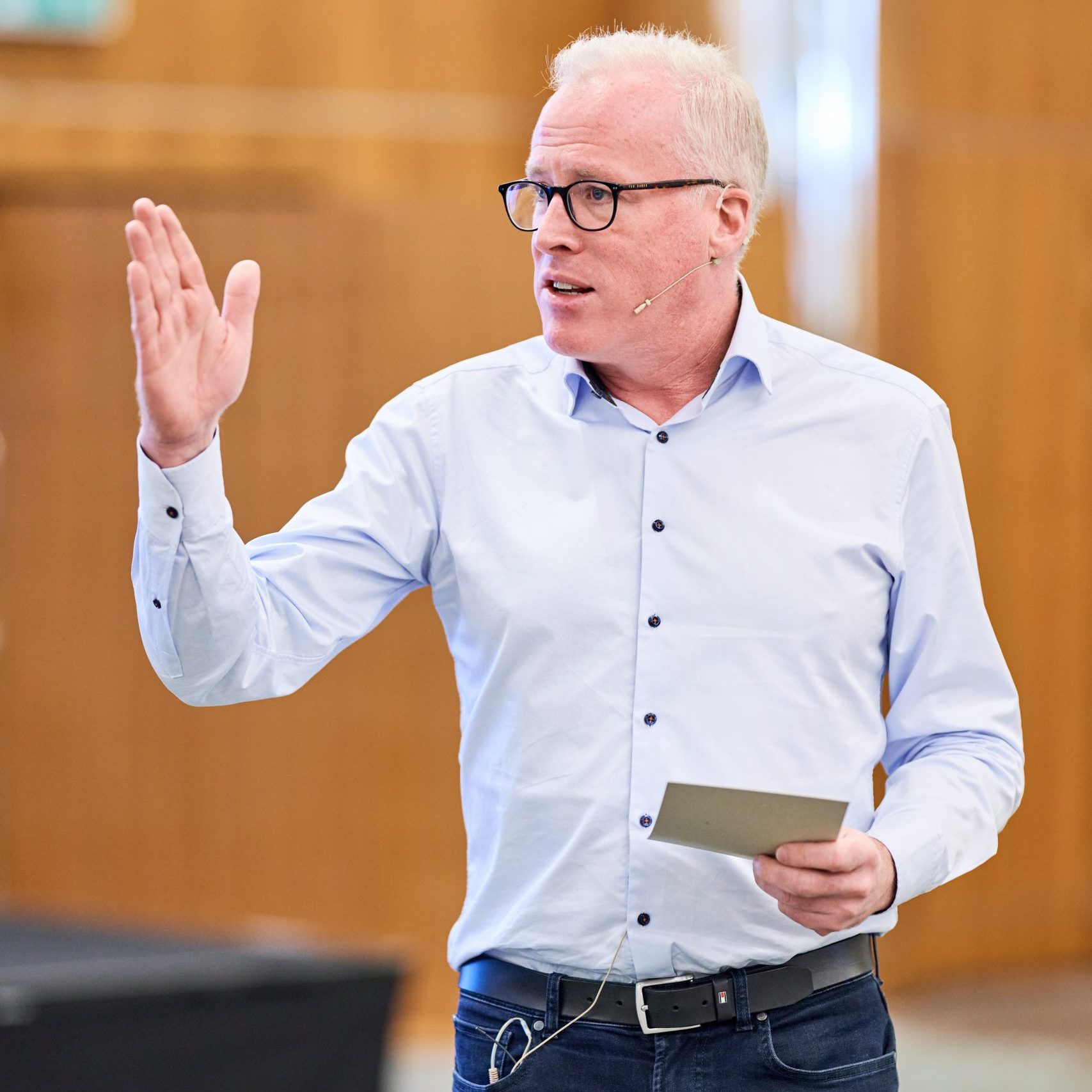 Damien O’Reilly, ICOS European Affairs & Communications Manager
Living and working in the so called “Brussels bubble”, and within that the agricultural bubble, it’s easy to become oblivious proportionately to everything else going on in the world. Days are consumed with meetings and reading documents emanating from the EU Commission, the Council and the European Parliament regarding farming and food as if there is nothing else going on in the institutional corridors in the Belgian capital.
For the past number of weeks, colleagues from other member states have been putting their head around the door seeking any news on what the Irish Presidency will consist of. Of course, they are talking about the Irish Presidency priorities regarding agriculture and CAP and generational renewal and animal welfare legislation and so on.
And when the Presidency priority document did land, it was the reminder that there is more to the EU than CAP and farming. Back in the early days of the EEC, the Common Agricultural Policy was the only show in town, with most European funds pumped into farming, food and rural areas. In a sign of how the shape of an enlarged EU looks in 2026, the proposed next budget (multiannual financial framework) from 2028-2034 sees the CAP allocation dipping to around 25% of total EU funds for the first time. Looking in from the outside, that is not surprising considering the world we live in today. Russia’s invasion of Ukraine has focused minds across Europe on security and defence. Outside of our agricultural bubble, it’s all the talk in Brussels.
The presidency of the Council is responsible for driving forward the Council’s work on EU legislation, maintaining the continuity of the EU agenda, and ensuring orderly legislative processes and cooperation among member states. Irish Ministers host and chair meetings of their EU counterparts, but this is not about selfishly pushing through proposals and legislation that is good for Ireland. Its remit is to act as honest brokers in planning, coordinating and chairing meetings, representing the Council, negotiating with other EU institutions, communicating about its activities and serving to find agreements in the Council.
The EU’s Strategic Agenda 2024-29 agreed by European leaders in late 2024 is framed around three pillars: Values, Security, and Competitiveness. Europe must act urgently to enhance its competitiveness and productivity. This was the main message in the report on the future of European Competitiveness published last September by former European Central Bank President, Mario Draghi. It was a wake-up call that the EU can no longer depend on the guard rails of the single market to meet head on slowing productivity and rising energy costs. Alongside issues such as migration, climate change, AI, energy costs, defence & security; competitiveness is a focused priority.
And it has prompted the government to make the following promise at the launch of the Presidency priorities last month. “The Single Market is the foundation of Europe’s economy and prosperity. The Irish Presidency will work to eliminate barriers, tackle regulatory burdens, boost internal market trade, drive digital transformation and ensure a level playing field for businesses operating across the EU. We will make it easier for business to start-up and scale seamlessly across the Union, including through the EU Inc. proposal.”
In late 2023 as the last Commission and Parliament terms were winding down and campaigning for the current term was ramping up, farmers took to the streets across Europe fed up with rising costs and strangling bureaucracy. The shift to a slightly more right-wing parliament the following summer at the expense of the Greens among others prompted a response from the new Commission college under President Ursula von der Leyen.
A series of Omnibus packages were announced aimed at reducing the administration burden smothering businesses and farmers. We are yet to see the fruits of those proposals, but it was a quasi-admission by the Commission that much of the aspiration tied into the 2020 Green Deal to decarbonize Europe to net zero emissions by 2050 was simply unimplementable at ground level. The 2040 and 2050 climate targets importantly remain but the roadmap should be a little smoother if the omnibus packages work.
But back to the present and whatever about the Irish Presidency priority list which is effectively a manifesto promising to tick all the boxes which defines the EU project, the not so pleasant elephant in the room between now and new yeas eve is the monumental challenge of agreeing on the unions budget proposal for 2028-2034. The Lithuanian Presidency in the first half of 2027 will take the baton because there is little hope of final agreement during the Irish Presidency. The Commission published its Multiannual Financial Framework last July pricing it at around €2trillion. Within that, around €300 billion has been ringfenced for CAP, an estimated cut of 20% from the current round. Putting on the agriculture bubble hat, that is where our eyes will be focused as the Taoiseach and his ministers try to bring some rhyme and reason to what will be, an almighty row over who funds what and what funds who.
It is only when the overall budget is agreed, that we will see the wood from the trees on how much will be allocated for CAP. Already we are resigned to the idea that the old 2 pillar CAP structure will be no more with efforts switching to making sure that there is enough money left to keep farmers on the land and environmental schemes funded over the next 10 years. Food security is strategic for the EU, but it can’t be guaranteed if the necessary subsidies are not there.
Speaking in Brussels last month as he prepared to take the chair of the AGFISH Council, Minister for Agriculture Martin Heydon stated; “the CAP remains essential to a sustainable future for the agri-food sector. The next EU Budget will be very different in many ways, given the new and urgent demands. However, as a first principle, the CAP must remain a core expenditure priority, given the economic, social and environmental benefits it brings across all Member States.”
That is the least farmers, co-operatives and indeed consumers across the EU expect, considering the value of the Common Agricultural Policy in terms of keeping farmers on the land, rural areas enriched and food prices affordable. But with the proposal as it stands to slash the fund below €300 billion in ringfenced monies and the effective erasing of the two-pillar system, there is huge concern.
The Commission says it is strongly committed to generational renewal. Agriculture Commissioner Christophe Hansen has published a strategy and Maria Walshe MEP is leading the line in the Parliament on the subject, but how can young people be attracted into a sector with so much uncertainty around “supports”? That is the circle that needs to be squared, and Ireland has an opportunity over the next six months to lead the charge.
As mentioned at the beginning, Brussels is not all about CAP and the Irish Presidency is not all about it either. Security and resilience, competitiveness, climate action, rule of law, digitalisation, health, human rights, trade, future enlargement of the EU and of course securing a budget to pay for all these daily challenges in a volatile geopolitical world will be front and centre on the agenda between now and Christmas. But in the agricultural bubble in the Brussels bubble, shaping a resilient and effective roadmap for the future of farming in Europe, sustainability, land use, carbon farming, attracting more women and young people, simplification and prioritising food security will be closely monitored.