
EU transport proposals could end Irish calf exports without essential amendments
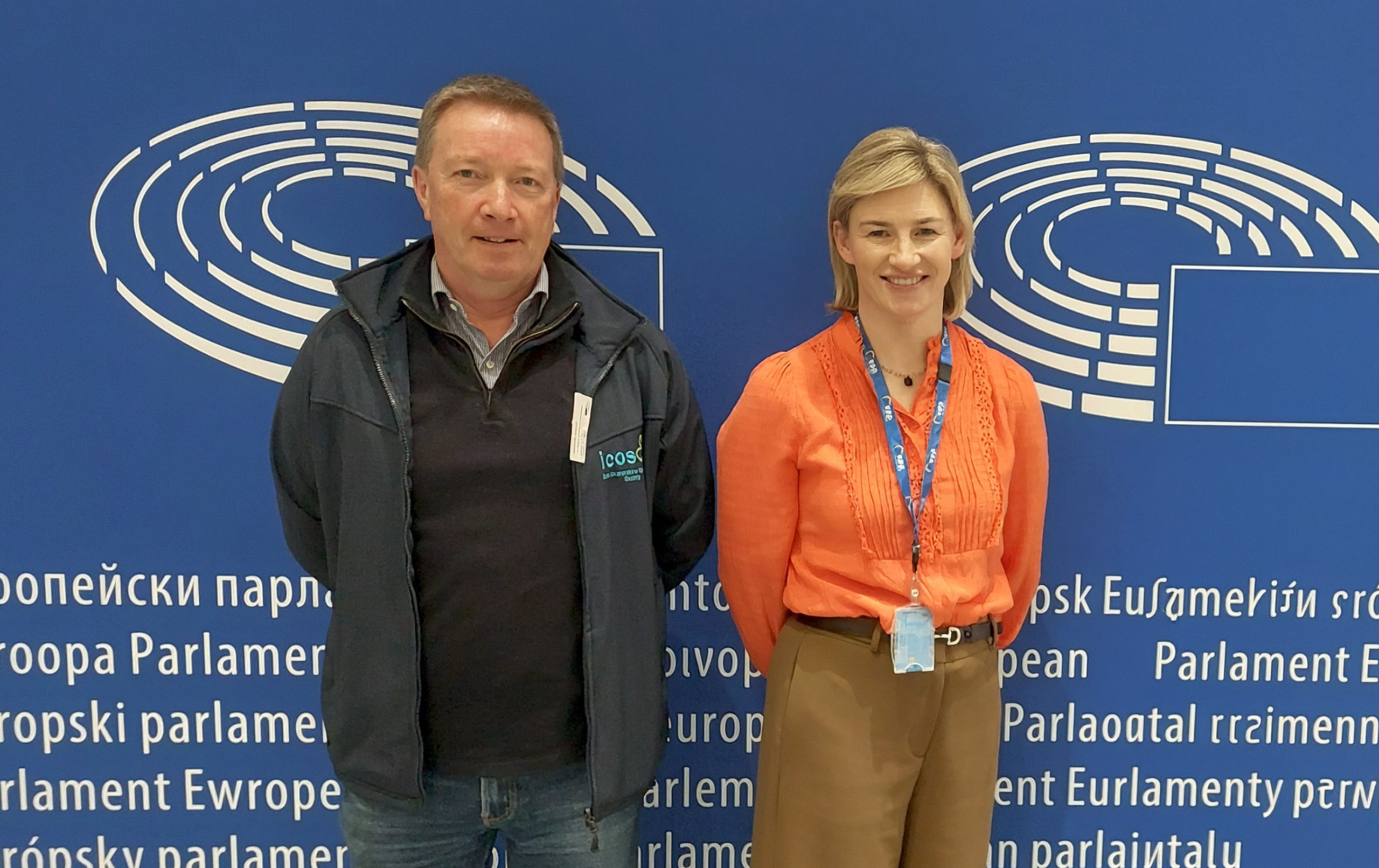 Ray Doyle of ICOS and Nina Carberry MEP pictured at the European Parliament prior to their meeting. ICOS also met with Ciaran Mullooly MEP on the issue of calf exports.
Brussels 20th November 2026 – The Irish Co-operative Organisation Society (ICOS) has cautioned that proposed new EU animal transport legislation could effectively bring Ireland’s trade in unweaned calf exports to a halt unless amendments are introduced to reflect the practical realities of transporting livestock from an island nation.
The warning follows meetings held in Brussels with Irish MEPs Ciaran Mullooly and Nina Carberry, during which ICOS highlighted two particularly important changes required to protect the trade while maintaining the highest animal welfare standards.
ICOS is seeking a reduction in the proposed seven-day standstill requirement affecting assembly centre operations to a more practical 24-hour period, subject to appropriate animal health and welfare safeguards.
“A seven-day standstill will be unworkable for Ireland’s livestock export system. It will create serious capacity pressures, additional costs and potentially greater animal health risks,” said Ray Doyle, Livestock and Environmental Services Executive at ICOS.
ICOS is also seeking adjustment to the proposed requirement to feed unweaned calves exclusively with milk or milk replacer during transport, on the basis that this presents significant practical difficulties, particularly aboard ferries.
“There should be greater flexibility within the proposed legislation to permit other nutritionally appropriate liquid feeds, subject to veterinary oversight and scientific validation. For example, pre-prepared and pre-packaged liquid formulations incorporating electrolytes, proteins and appropriate energy sources such as glucose could offer a practical alternative, provided they are demonstrated to meet the needs of calves during transport.”
“We need practical, arrangements that protect calf welfare while recognising the realities of transport by sea.”
He emphasised that live exports provide an essential market outlet for Irish dairy farmers, supporting competition for calves, farm-gate prices and the wider rural economy.
“The welfare of animals during transport is absolutely paramount. It is in nobody’s interests for animals to experience anything less than the best possible conditions. Accordingly, Ireland’s livestock industry is committed to safe, humane and responsible international transport, supported by established welfare measures and ongoing improvements in standards,” Ray Doyle concluded.