
Irish dairy industry entering a period of managed transition – ICOS
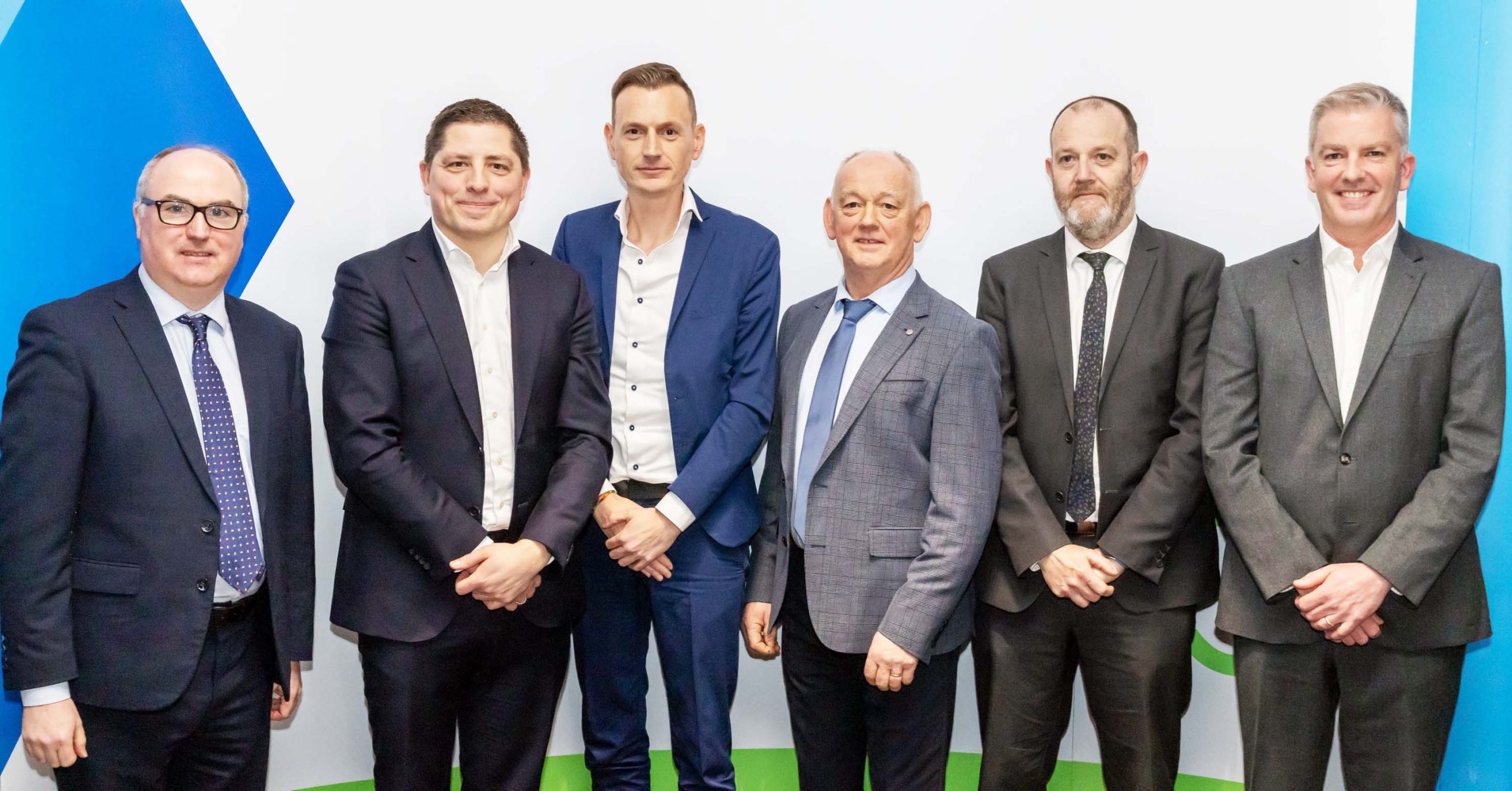 Pictured L to R: Eamonn Farrell, ICOS, Anders Rasmussen, Rabobank, Tom Booijink, Rabobank, Eamonn McEnteggart, Chair of the ICOS Dairy Committee, TJ Flanagan, ICOS CEO and Brian Reidy, Rabobank.
ICOS Dairy Committee reviews key developments in Irish and global dairy sector
EU milk production could decline by approximately 5% between 2025 and 2030.
Addressing the current policy challenges facing the Irish dairy sector, the meeting involved a keynote address by Martin Heydon, the Minister for Agriculture, Food and the Marine.

In welcoming the Minister, the chair of the ICOS Dairy Committee, Eamonn McEnteggart described the extension of Ireland’s nitrates derogation for 3 years as a massive relief for farm families and the entire dairy industry. He said that over the next 3 years, we must seize the opportunity to maintain and improve water quality standards by extending our work with farmers and by ensuring a practical and workable approach to the Habitats Directive.
The Minister expressed optimism for the future pointing to the recent launch of the Boyne Catchment Programme. He described the extension of the derogation as an opportunity for the sector to double-down on the positive initiatives in place to improve water quality. The Minister also highlighted the importance of the CAP in the context of food security. He said there was too much complacency around food security which he said needs to be addressed and this will be a priority for the Irish Presidency of the EU.
On other key topics, the Minister said he recognised the concerns of ICOS on generational renewal, the CMO regulation, the CBAM Tax on fertilizer, income volatility and bovine TB and bluetongue.
The ICOS Dairy Committee and Co-op Chairs recently met to examine key developments shaping the Irish and global dairy industries amid significant structural and policy change across Europe. The meeting was addressed by Minister for Agriculture, Food and the Marine, Martin Heydon TD, and senior Rabobank analysts.
Discussions focused on market trends, processor consolidation, environmental regulation and the long-term outlook for milk production.
Against a backdrop of elevated EU and global milk supply, Rabobank outlined consolidation trends and forecast that EU milk production could decline by about 5% between 2025 and 2030. This contraction reflects tightening environmental and climate regulations, land use constraints, rising input costs and an ageing farmer population.
The analysis indicated these structural pressures will accelerate consolidation across European dairy processing as tighter milk volumes drive processors to seek scale, secure supply, improve efficiencies and manage volatility.
Rabobank noted consolidation can deliver efficiency gains of 4% to 5% of revenues through operational integration, procurement efficiencies and better asset use. For Ireland, as a major global dairy exporter, maintaining competitiveness will be critical.
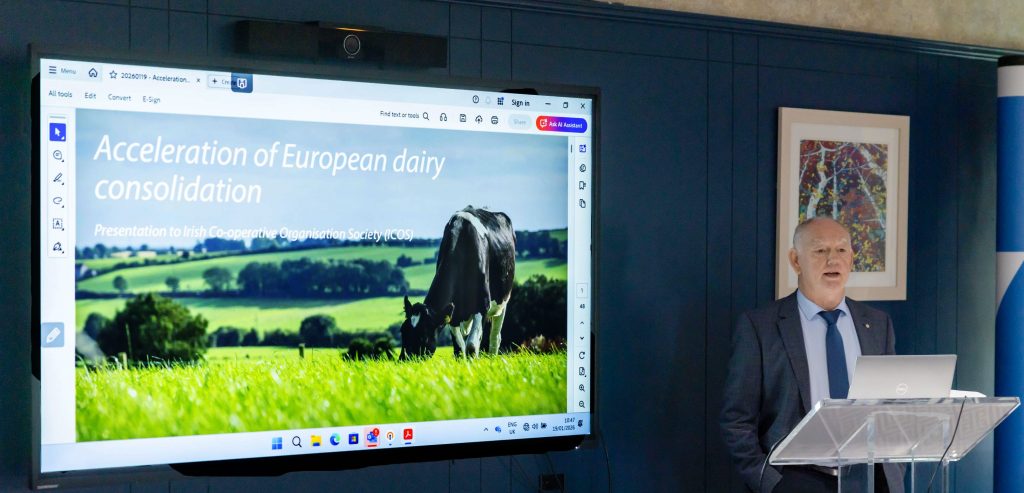
Minister Martin Heydon addressed current policy challenges. Welcoming him, ICOS Dairy Committee Chair Eamonn McEnteggart described the three-year extension of Ireland’s nitrates derogation as significant relief for farm families and the wider industry, providing regulatory certainty and an opportunity to build on water quality progress.
“The next three years must strengthen farmer engagement, improve environmental performance and ensure the Habitats Directive is implemented in a practical, workable way. We must balance environmental ambition with sustaining Ireland’s pasture-based model, which underpins rural economies and export performance,” said Mr. McEnteggart.
Minister Heydon expressed confidence in the sector’s ability to respond, citing the Boyne Catchment Programme as an example of science-based collaboration to improve water quality. He said the derogation extension is not a reprieve but an opportunity to demonstrate environmental leadership.
In a wider context, Minister Heydon stressed the importance of the Common Agricultural Policy in protecting European food security. He warned against any complacency, noting that recent global disruptions underline the need for strong domestic production.
Food security will be a priority during Ireland’s forthcoming EU Presidency, particularly aligning sustainability with economic viability and long-term capacity.
Discussions also covered generational renewal, the Common Market Organisation regulation, potential impacts of the Carbon Border Adjustment Mechanism on fertiliser costs, income volatility and animal health challenges including bovine TB and bluetongue.
The Minister acknowledged these concerns and reaffirmed engagement with the co-operative sector to support resilience and competitiveness.
The ICOS Dairy Committee concluded that the Irish dairy industry is entering a period of managed transition. While global dairy demand remains strong, particularly in growth markets outside Europe, future success will depend on efficiency, environmental credibility and strategic collaboration across the value chain.
“In a European context where milk output may decline, Ireland’s grass-based, export-focused model remains well positioned, provided policy stability, innovation and investment continue,” Mr McEnteggart concluded.